This case study outlines the development and implementation of a Virtual Reality (VR) exposure therapy project aimed at treating acrophobia (fear of heights). The project involved creating and evaluating immersive VR simulations to provide graduated exposure therapy, leveraging Unity to build realistic high-altitude scenarios.
Research Phase
The research phase involved a thorough review of best practices in VR design and the effective use of sound to enhance immersion and therapeutic impact.
VR Design Principles
Virtual Realism: High-quality graphics and lifelike textures enhance immersion.
User Comfort: Stable frame rates and smooth transitions minimize motion sickness.
Gradual Exposure: A tiered approach, starting with less intimidating scenarios, helps build tolerance to heights.
Role of Sound
Spatial Audio: Creates a 3D sound environment, enhancing realism.
Emotional Cues: Sounds like city noise, nature, and bridge creaking heighten emotional responses.
Synchronization: Matching audio cues with visual events maintains immersion.
These insights guided the design and development of the VR exposure therapy, ensuring a realistic, comfortable, and effective experience for treating acrophobia.
Design Process
The design process for this VR exposure therapy was driven by the need to create realistic, immersive environments that progressively challenge participants while ensuring their safety and comfort. Key considerations included
Visual Realism
High-quality 3D models and textures to create believable environments.
User Comfort
Minimizing motion sickness and ensuring smooth interactions.
Gradual Exposure
Structuring the experience to start with less intimidating scenarios and gradually increasing the difficulty.
Feedback and Iteration
Incorporating user feedback to refine and improve the simulations.
Design of VR Simulation Levels
The VR exposure therapy was structured into three distinct levels, each designed to progressively increase the complexity and realism of the height exposure, helping participants gradually acclimate to higher elevations
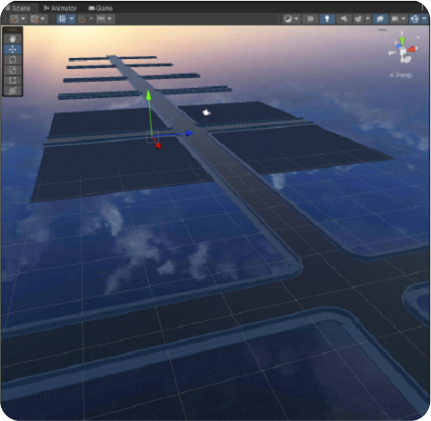
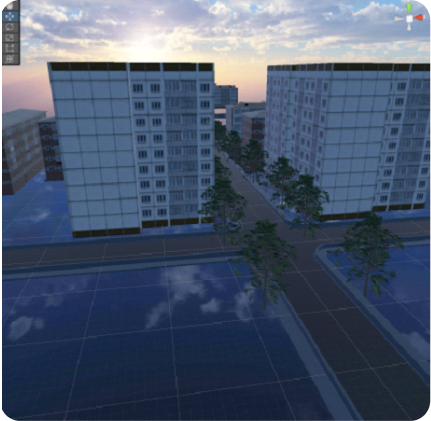
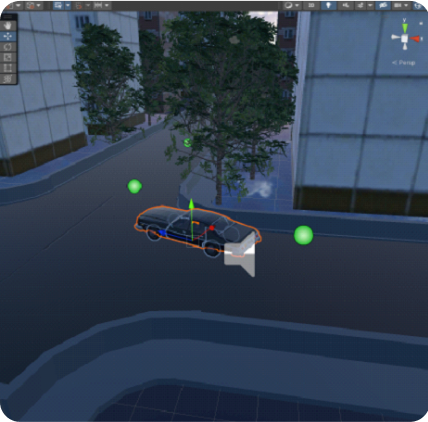
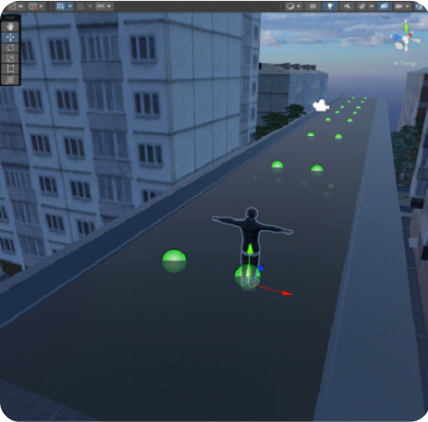
This phase introduced mild height exposure in a controlled urban setting, simulating an eleven-meter city walkway. Ambient city noises, such as traffic and pedestrian chatter, enhanced realism, immersing participants in a bustling environment.
Creating a city-like path
Adding trees and buildings
Setting up cars and their paths. The sounds they make served as auditory cues for participants
Setting up humans and their paths
Why This Scene?
The urban environment was chosen for its familiarity and relatively low elevation, making it less intimidating for initial exposure. The bustling city atmosphere with moving cars and pedestrians added a layer of realism without overwhelming the participant.
Outcome of Usability Testing
Participants found this level to be visually realistic and immersive, with minimal discomfort reported. The gradual exposure helped build confidence and ease participants into the VR experience. Feedback indicated that the urban setting was effective in simulating a believable environment, aiding in the acclimatization process.
Level Two:
Mountainous Terrain with Glass Walkway
Purpose
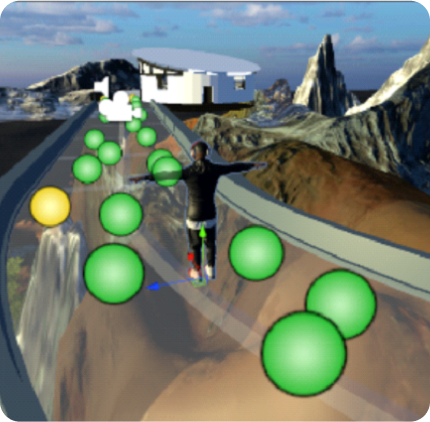
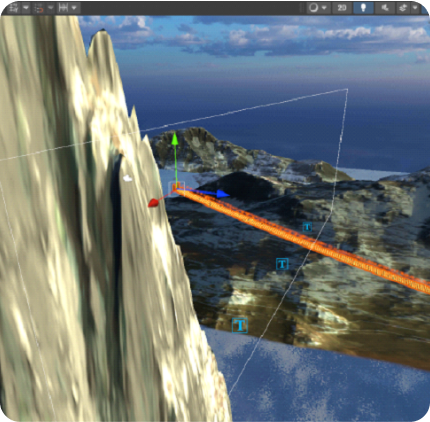
The second level simulated a natural, moderately elevated setting with immersive sounds, creating a realistic mountainous atmosphere. Footsteps on the glass walkway helped participants confront their fear of heights safely.
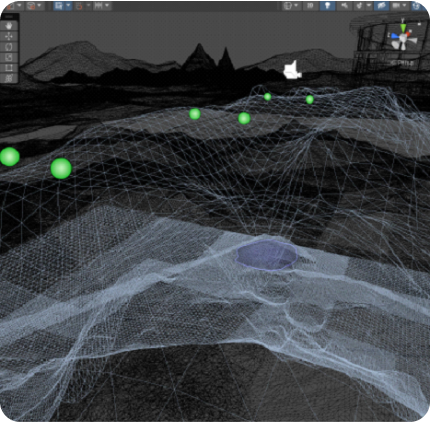
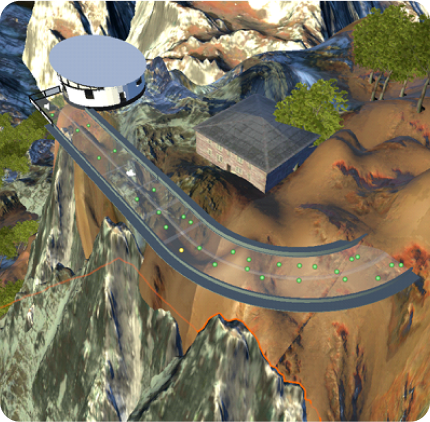
Building terrains for level two of the experience
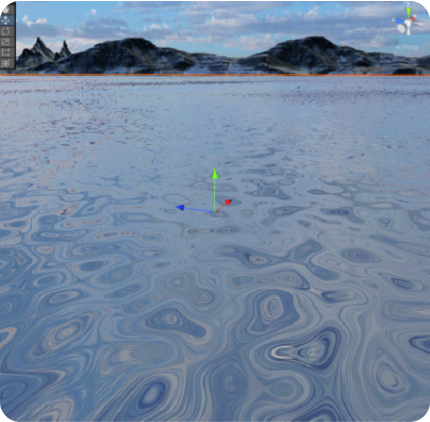
Setting up the water shader for level two
A translucent glass walk-way for users to gauge just how far they are
Setting paths for various humans on the glass path way
Why This Scene?
A mountainous terrain was selected to offer a different type of height exposure, simulating natural cliffs and peaks. The inclusion of a glass walkway allowed participants to see underneath them and gauge their height from a safe point, adding a unique element to the experience.
Outcome of Usability Testing
Participants responded well to the natural setting, despite some increased anxiety compared to the urban environment. The glass walkway effectively helped them confront their fear of heights. This level successfully expanded their comfort zones for greater height exposures.
Level Three:
High Suspension Bridge with Fog
Purpose
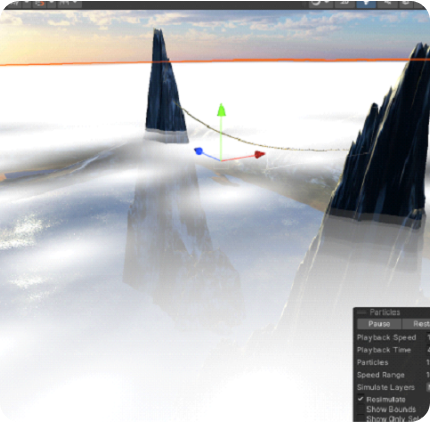
The final level featured a high suspension bridge to push participants' height acclimatization to the limit in a safe VR environment. Creaking bridge noises and whistling wind intensified acrophobic reactions, while fog beneath the bridge altered height perceptions.
The rope bridge suspended across the mountainous chasm in Level Three
Fog effects to enhance the sense of height and isolation
Why This Scene?
The suspension bridge was selected for its height and ability to evoke strong acrophobic reactions. Fog underneath varied participants' perceptions: some felt increased anxiety, perceiving greater height, while others felt relieved, as the fog obscured views of the ground.
Outcome of Usability Testing
This level induced high anxiety, yet prepared participants from earlier stages. Diverse reactions to the fog underscored the need for personalized exposure therapy. Overall, gradual exposure effectively built resilience and reduced fear.
Usability Testing
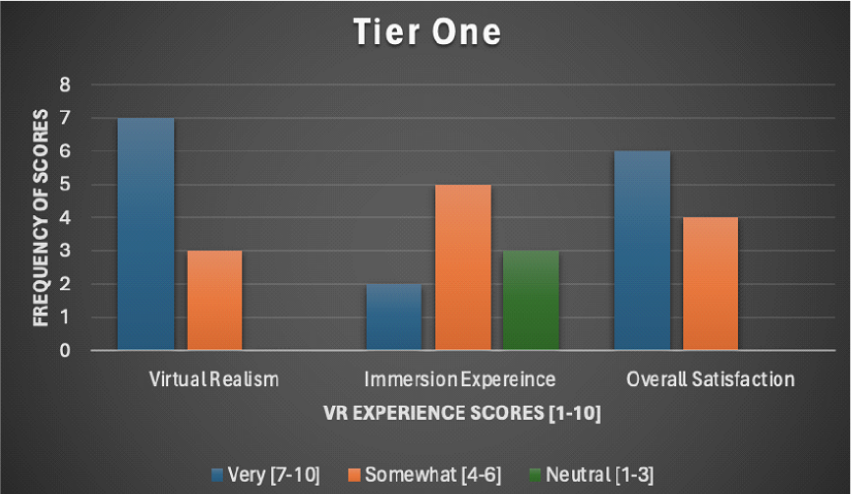
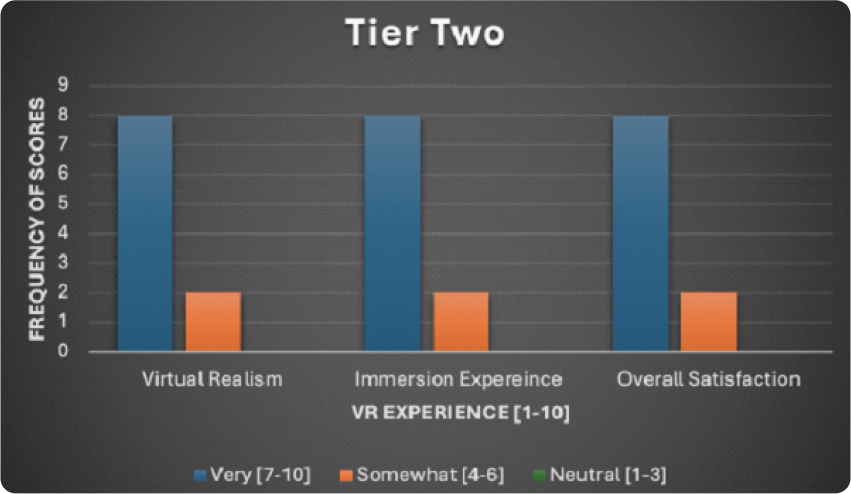
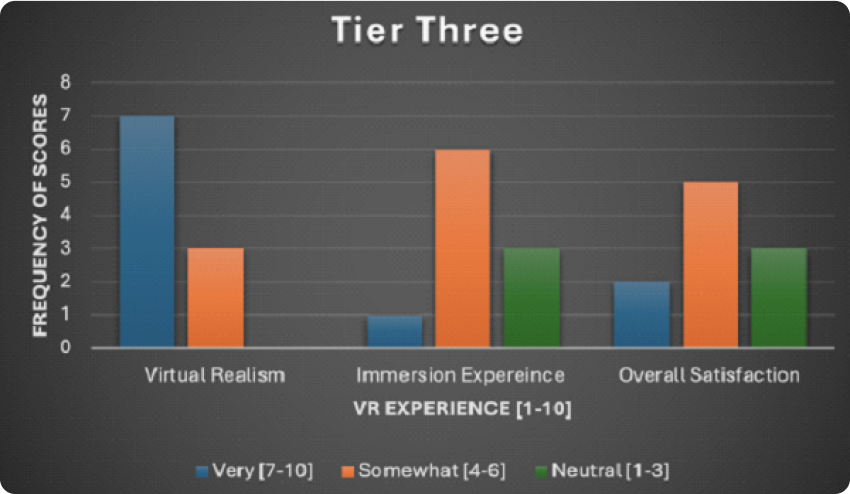
Virtual Realism
Participants consistently praised the detailed environments, noting a strong sense of realism across all levels.
User Comfort
While some motion sickness was reported—particularly in the final level—the familiarity of early environments, like the urban setting in Level One, helped ease initial discomfort.
Customization Needs
Reactions varied to elements like the fog in Level Three, highlighting the importance of tailoring exposure therapy to individual mental models. A one-size-fits-all approach proved less effective.
Immersion
Levels featuring mountainous terrain and suspension bridges created a strong sense of presence. Auditory details—city sounds, nature ambience, and subtle bridge creaks—greatly enhanced immersion.
Emotional Response
Gradual exposure effectively reduced anxiety over time. Familiar real-world scenarios like the glass walkway helped participants engage deeply, though emotional impact varied by individual.
Outcome & Learning
Key Learnings
Gradual Exposure
Crucial for building tolerance and managing fear responses.
Scene Selection
A mix of urban, natural, and extreme environments is essential for effective exposure therapy.
User-Centered Design
Customization is key. Individual differences—like discomfort with fog—must inform design choices.
Iterative Feedback
Ongoing user input played a vital role in improving comfort, engagement, and overall effectiveness.
.svg)














.svg)